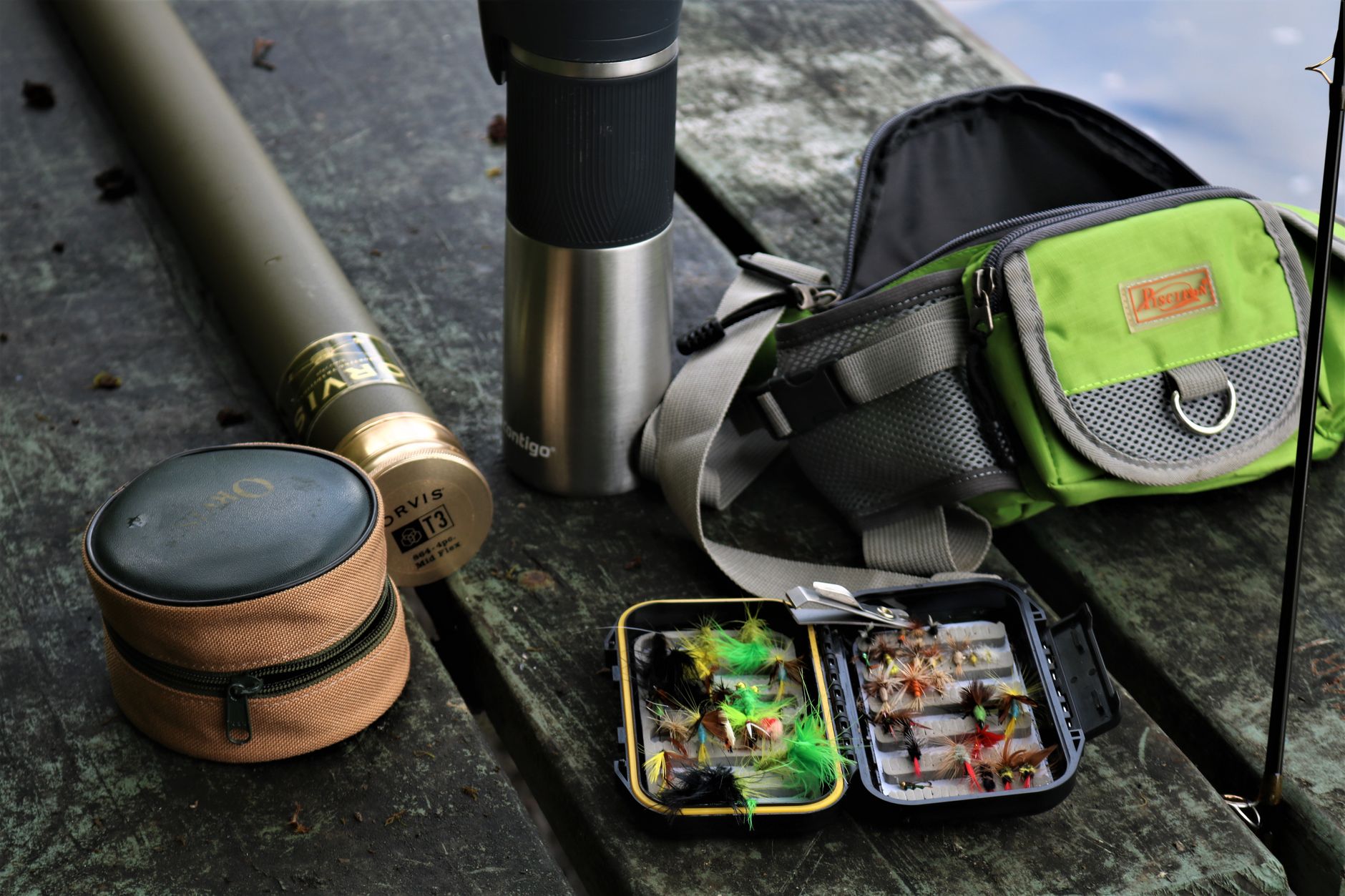
Most anglers treat a fishing rod travel case as an afterthought, and then watch the baggage carousel deliver a tube full of broken graphite. I’ve seen it happen more than once. Airlines aren’t gentle with long, awkward bags, and a trolley handle plus a 70 lb suitcase landing on your rod case is a real scenario, not some paranoid fantasy.
The good news is that rod protection has gotten genuinely good over the last decade. You’ve got soft cases under $50, hard-shell options pushing $300, and carbon fiber tubes that weigh less than your lunch. But they’re not interchangeable, and which one you need depends almost entirely on how you’re traveling, not just how far.
Here’s a run through the real tradeoffs, the airline rules that actually matter, and which cases hold up for which rod types.
Hard vs Soft Case Tradeoffs
Soft cases run $30 to $80 and they’re fine for road trips, kayak rooftops, and boat storage. Most are padded nylon with a zipper and a shoulder strap, good for scratches and casual bumps. What they can’t do is resist compression. Baggage handlers stack bags, and if something heavy lands on a soft case, the rod takes that force directly.
Hard cases are built around a different problem. A decent hard shell, think Plano’s Protector series or an SKB fishing case, can absorb 70 lb of compression without transferring meaningful pressure to the rods inside. That matters on a plane. The interior foam is usually customizable, and the exterior is either ABS plastic or aluminum, with prices running from around $80 up to $300 for a fully waterproof SKB or Seahorse unit.
Carbon fiber tubes are worth mentioning separately. They’re stiff, very light (usually under 2 lbs for the case alone), and surprisingly impact-resistant. The catch is cost: expect $150 to $250 for a quality one, and they typically fit fewer rods. If you’re flying with one or two high-end fly rods, that’s probably where I’d spend the money.
- Soft cases: best for car travel, under $80, no compression protection
- Hard ABS cases: airline-appropriate, $80–$200, heavier but widely available
- Carbon fiber tubes: lightest option, $150–$250, limited rod capacity
- Aluminum cases: most durable, $200–$300+, heaviest
Multi-rod capacity is another real variable. Tubes designed for a single rod are slim and easy to check. Cases holding two to eight rods are bulkier but make more sense when you’re bringing multiple setups. Plano’s All Weather series handles up to six rods and fits airline length rules, which brings us to the next issue.
Airline Rules and Size Limits
TSA does allow fishing rods in checked baggage. Rods in carry-on bags aren’t permitted, no exceptions. So if you’re flying, you’re checking the case, which means it needs to survive the checked baggage process, not just airport corridors.
The rule that trips people up is linear inches. Most major airlines cap checked bags at 62 linear inches total, meaning length plus width plus height combined. A rod case that’s 48 inches long, 6 inches wide, and 6 inches tall works out to 60 linear inches and fits fine. But a 52-inch case with similar dimensions pushes you to 64 linear inches, triggering an oversize fee, usually $75 to $200 depending on the airline.
Some airlines, Delta and United among them, have sporting equipment policies that handle fishing gear differently from standard oversized bags. Worth a call before you book, honestly, because the fee structures are inconsistent. Southwest has been more forgiving in my experience, but that can change by route.
A few hard case brands, SKB in particular, make cases specifically sized to land just under 62 linear inches. That’s not a coincidence. Measure your loaded case before you get to the airport rather than guessing at the counter.
Top Cases by Rod Type
Fly rods usually break into four sections, so a 36 to 48-inch case covers you. Fabric roll cases like the Cliff Outdoors Bugger Beast work for car trips. For airline travel, I’d go with a hard tube, Seahorse or a carbon fiber option from a brand like Sage or Loon. Fit matters here: loose rods rattle, and the guides take damage fast.
Spinning and casting rods that break into two pieces need longer cases, usually 52 to 64 inches. Plano’s All Weather 42-inch and 56-inch cases do well here. They’re ABS hard shell, foam-padded, and priced around $80 to $120. Not glamorous, but from what fellow anglers report, they’ve checked on dozens of flights without drama.
Surf and heavy saltwater rods are the hardest to travel with because they’re often seven to nine feet and break down to three or four-foot sections. A telescoping rod solves part of this, but if you’re flying with standard surf gear, an oversized hard case is your only real option. Budget for the oversize fee either way.
What to Check Before You Buy
A fishing rod travel case is only as useful as its fit to your specific rods and your actual travel method. Measure your longest rod section before buying anything. Check the airline’s current sporting equipment policy, not some forum post from three years ago, and think about whether you need to protect one rod or six, because that changes everything.
Brands like Plano, SKB, and Seahorse have earned their reputation by building to actual airline specs, not just “travel-friendly” marketing language. In most cases, spending $120 on a proper hard case is cheaper than one oversize fee plus one broken rod tip replacement. The math really isn’t complicated.
FAQs
Can you take a fishing rod on a plane?
Yes, in checked baggage only. TSA prohibits rods in carry-on bags regardless of size.
What size fishing rod case fits airline requirements?
Most airlines cap checked bags at 62 linear inches combined. A case around 48 to 56 inches long with slim dimensions usually fits within that limit.
Are hard fishing rod cases worth it?
For air travel, yes. Hard cases resist compression forces that soft cases can’t, and one broken rod costs more than the case upgrade.