The Industrial Revolution reshaped almost everything about daily life, and the numbers still catch me off guard — over 1.5 million children working in factories by the late 19th century. Most people know the headline story, but the specific technologies that made it all possible get far less attention than they deserve. Industrial revolution technology is worth understanding properly, not just as history trivia but because it explains how modern manufacturing actually thinks.
The steam engine arrived in 1712, the spinning jenny in 1764, and the power loom by 1785. Each one arrived quickly after the last, which made the whole shift feel sudden to the people living through it. Goods that once took weeks to produce by hand could be turned out in hours. That compression of time changed everything downstream.
Key Innovations of the Era
A few inventions carried most of the weight during this period. Here’s what actually mattered and why:
- Steam Engine (1712): Thomas Newcomen built the first workable version; James Watt made it genuinely useful decades later. It powered mills, railways, and steamships.
- Spinning Jenny (1764): James Hargreaves designed it so one worker could spin multiple spools at once, which drove yarn prices down fast.
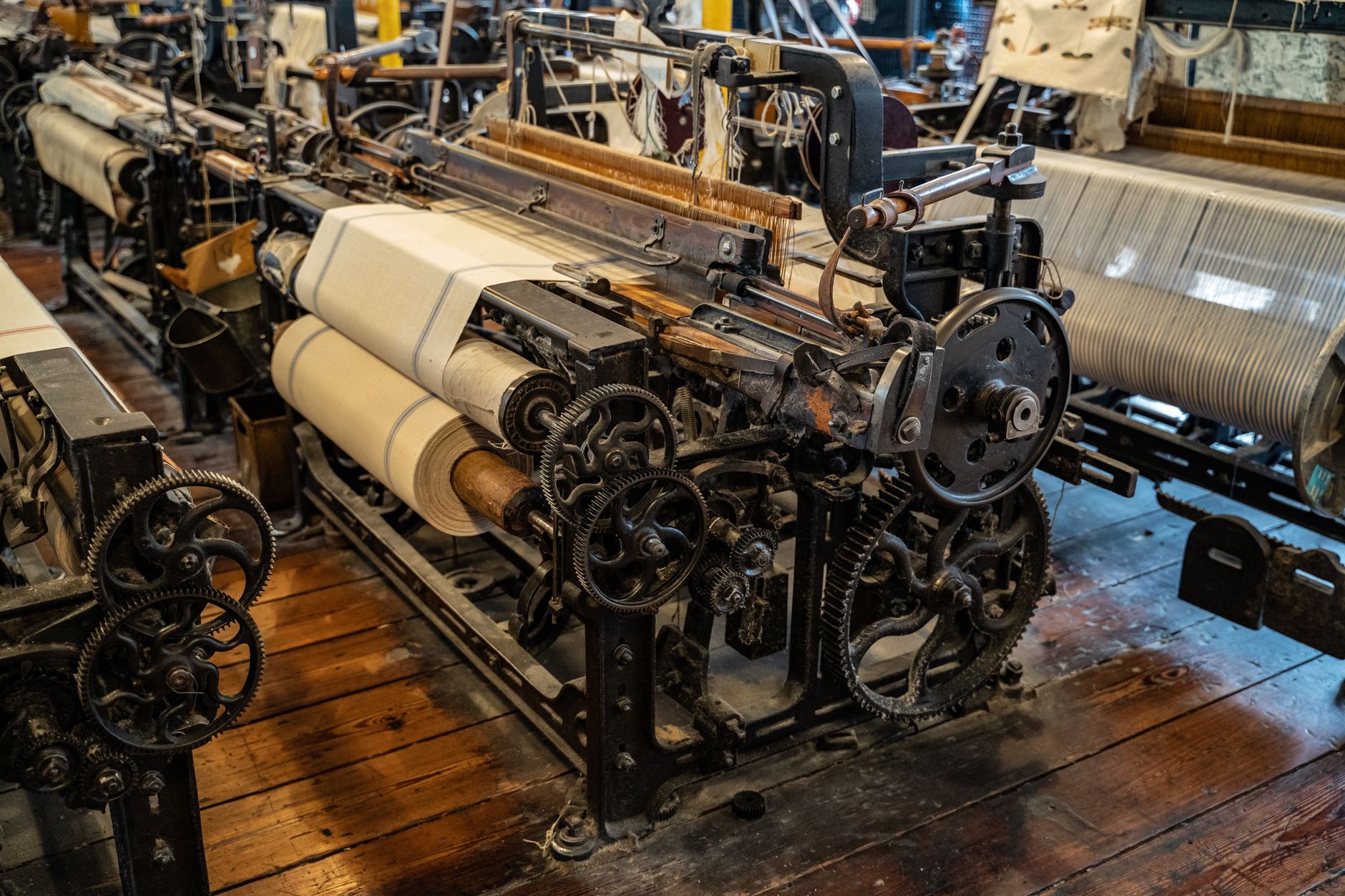
- Power Loom (1785): Edmund Cartwright automated weaving. Fabric output climbed while the need for skilled hand-weavers dropped sharply.
- Cotton Gin (1793): Eli Whitney’s machine streamlined seed separation from cotton fibers, pushing cotton output up roughly 50 percent almost immediately.
What strikes me about this list is how tightly the inventions connected. Cheaper yarn meant higher demand for weaving, which made the power loom commercially urgent. One problem solved created the next problem.
Impact on Manufacturing
Industrial revolution technology gutted the old artisan workshop model. Factories spread across Europe and North America at a pace that contemporaries described as disorienting, and honestly I think that word fits. Production became faster, cheaper, and far more standardized than anything a single craftsman could offer.
Before mechanization, making cloth was slow, personal work. A family might spend a week on fabric a factory could now produce in an afternoon. Consumer goods got cheaper. Markets expanded. But the factory system also created something new and not entirely welcome: a workforce where individual skill mattered less each decade.
The darker side is hard to look away from. Demand for cheap labor pulled children as young as five into factories, working long shifts in genuinely dangerous conditions. This is the part of industrial revolution technology that social reformers eventually forced into public debate, and those debates took decades to resolve even partially.
Social Changes and Workforce Shifts
Workers followed the factories into cities, and rural communities shrank as a result. Urbanization wasn’t gradual; from what I’ve seen in the historical accounts, some towns tripled in population within a generation. That kind of growth outpaced housing, sanitation, and basic infrastructure entirely.
Skilled trades took a serious hit. Crafts that had supported families for generations lost their economic value almost overnight, replaced by factory positions that required little training and paid accordingly. Labor became interchangeable in a way it never had been before, and workers felt that.
The telegraph in 1837 (Samuel Morse’s contribution) shifted communication the same way the steam engine shifted transport. Factory owners could coordinate across distances, manage supply chains, and respond to market changes in hours rather than weeks. It reinforced everything the industrial economy was already doing.
Legacy of These Technologies
The direct line from industrial revolution technology to modern manufacturing is shorter than most people expect. Steam engines led to internal combustion engines. Automated looms informed how today’s textile plants are designed. Assembly line thinking, which you’ll find in car plants and electronics factories alike, traces back to the efficiency obsession that started in this period.
I’m genuinely uncertain whether the speed of that transformation was avoidable, or whether some version of the social damage was always going to happen when production scaled that fast. The same arguments about labor rights, working conditions, and what societies owe their workers keep resurfacing. That continuity is probably the most honest legacy of the era.
What This Period Still Teaches Us
The industrialists who built this era weren’t thinking about legacy. They were solving immediate production problems with whatever tools existed. And the tools they built reshaped everything anyway. Industrial revolution technology is a useful reminder that individual inventions rarely arrive with a clear picture of their own consequences.
If you’re studying this period seriously, look past the famous names. The spinners, weavers, and child laborers who lived inside these changes understood the technology differently than the inventors did. Both perspectives belong in the story.
FAQs
What were the key inventions of the Industrial Revolution?
The steam engine, spinning jenny, power loom, and cotton gin transformed manufacturing and drove productivity gains across textiles, transport, and trade.
How did technology change manufacturing?
Mechanization replaced hand production with faster, standardized factory output, making goods cheaper and expanding consumer markets significantly.
What social issues arose during this period?
Child labor, dangerous working conditions, and severe urban overcrowding emerged as factories drew millions of workers into rapidly growing industrial cities.