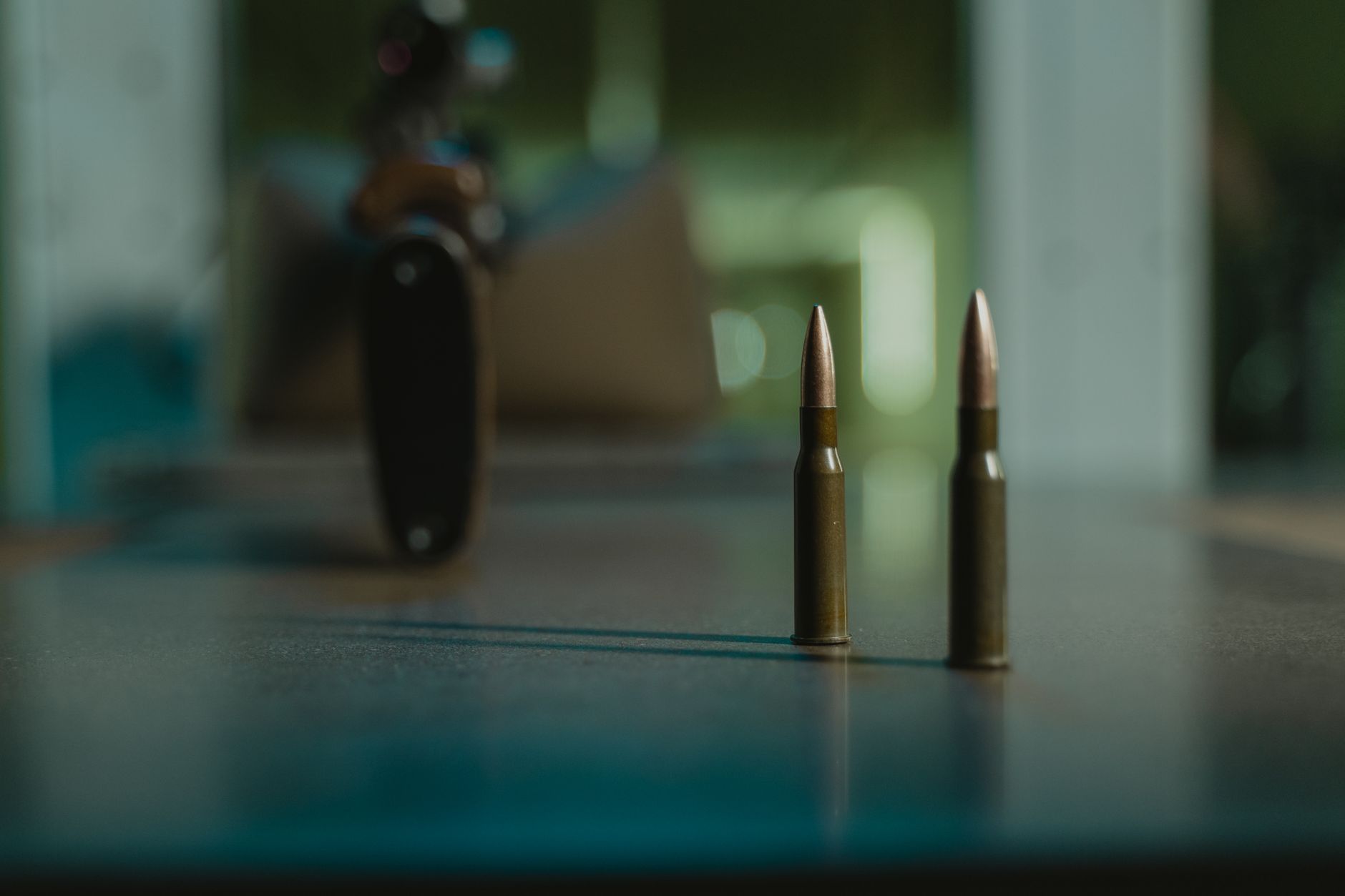
How far does a bullet travel? Well, a .308 Winchester fired at about 30 degrees elevation can reach around 4.5 miles before hitting the ground. Most folks I’ve spoken to guess it’s somewhere between 500 yards and a mile, but they often underestimate by a factor of three or four.
That gap between what people think and reality can be pretty dangerous. A missed shot at a target doesn’t just stop at the backstop. It keeps going, affected by gravity, air resistance, and the angle of the barrel when fired. Knowing these numbers isn’t just an academic exercise; it can mean the difference between a safe shooting area and a risky one.
The Sporting Arms and Ammunition Manufacturers’ Institute (SAAMI) provides maximum range data for common cartridges, while military ballistic tables elaborate further for service calibers. The figures I’m sharing come from those resources and standard physics based on typical muzzle velocities.
Maximum Range by Caliber
The .22 LR is usually the first round people start with, and it might seem harmless. However, when fired at an optimal angle, a .22 LR can fly up to about 1.5 miles. That’s roughly 2,600 yards of potential flight for a round that only costs a few pennies. Sure, it won’t penetrate much at that range, but it can still break skin and cause serious eye injuries.
Now, stepping up to a 9mm round changes things a bit. Under ideal conditions, it can travel up to 2.5 miles, thanks to the heavier projectile at a moderate velocity. A .45 ACP isn’t too far behind; it has a slightly shorter range but still surprises many people. Oftentimes, folks think of pistol calibers as only short-range rounds, which isn’t entirely the case.
When it comes to rifle cartridges, the numbers start getting pretty impactful.
| Caliber | Approx. Max Range | Typical Muzzle Velocity |
|---|---|---|
| .22 LR | ~1.5 miles | 1,100–1,400 fps |
| 9mm | ~2.5 miles | 1,100–1,400 fps |
| 5.56 NATO | ~3.0 miles | 2,900–3,200 fps |
| .308 Winchester | ~4.5 miles | 2,600–2,900 fps |
The .308 Winchester figure tends to catch people off guard. While at 4.5 miles that bullet has lost considerable lethal energy, it still packs enough force to cause serious injuries. Then there’s the .50 BMG, which can travel beyond five miles according to some data. That’s part of the reason military ranges are measured the way they are.
Physics of Bullet Flight
As soon as a bullet leaves the barrel, gravity starts pulling it down. There’s no flat phase; the arc begins immediately. The shape of that arc depends on muzzle velocity, bullet weight, and the ballistic coefficient (kind of like how slippery the bullet is in air).
People often underestimate how much angle matters. An elevation of 30 to 45 degrees maximizes range for most projectiles. That’s why a bullet aimed steeply upward at a hillside is often much safer than one fired nearly flat over open ground. The latter can skip off hard soil, extending its travel unpredictably. Ricochets can add another layer of risk that no table can really account for.
Air resistance reduces velocity quickly, especially for lighter, faster rounds. A 5.56 can lose its lethality before reaching maximum range, but “losing lethality” doesn’t mean it stops moving. It still lands somewhere. Heavier, slower rounds like the .45 ACP hold onto their energy longer than you might expect.
Wind affects the horizontal drift, but it doesn’t cut down the range significantly. Humidity? It pretty much has no real impact at these distances, despite some claims you’ll see online.
Safe Backstop and Shooting Range Distances
So, how far does a bullet travel in the context of setting up a shooting range on private land? That’s a crucial question. From what I’ve seen, most state guidelines recommend a backstop height of 15 to 20 feet for rifle calibers, with a clear danger zone of at least 300 yards behind and to the sides of the target line for pistols. For .308 and similar cartridges, some advice goes as high as a clear zone of half a mile or more.
A solid earthen berm is still the standard best option. It should be deep enough—typically around six feet of compacted soil—for rifle rounds. Angled berms that catch bullets at 45 degrees are more effective than vertical ones since they absorb energy rather than just bouncing bullets back. Rubber mulch backstops work well in commercial ranges, but they require regular inspection. I’ve seen places where degraded rubber allows rounds to punch through after just a few years of heavy use.
Visually flagging your danger zone with posts or fencing makes a big difference, but surprisingly, many private range owners skip this step. It won’t stop a bullet but can prevent people from wandering in unknowingly.
FAQs
How far does a 9mm bullet travel?
A 9mm can travel up to around 2.5 miles at the right angle, although it loses its lethal energy well before that distance.
What caliber travels the farthest?
The .50 BMG boasts the greatest maximum range, going over five miles. The .308 Winchester reaches about 4.5 miles.
Can a bullet travel a mile and still be lethal?
Yes, for most rifle calibers. The .308 can maintain enough energy at one mile to cause serious injury, but penetration significantly drops off past that point.